


In 1960, Egypt began building the Aswan High Dam. The project would have submerged Abu Simbel, a temple complex carved directly into a cliff face during the 13th century BC reign of the pharaoh Ramesses II. UNESCO launched an international campaign to save it, and over the next several years, engineers cut the temples into more than a thousand blocks, each weighing up to 30 tons, and reassembled them on higher ground - 65 meters above and 200 meters inland from their original site. Around 50 countries contributed funding and technical expertise. The work ran from 1964 to 1968, and when it was finished, the reassembled temples matched their original positioning exactly, oriented to the same cardinal directions, with sunlight still reaching the inner sanctuary on the same days of the year.
That campaign became the catalyst for something much bigger than saving one temple. It forced a question that hadn’t been formally asked at the international level before: if one country’s infrastructure project could erase a piece of human history, whose responsibility is it to prevent that from happening? And who gets to decide what gets saved? The institution best positioned to answer turned out to be UNESCO (the United Nations Educational, Scientific and Cultural Organization), which had been charged with protecting cultural heritage since its founding but had not yet built a permanent system for doing so at scale. Abu Simbel provided the impetus to build one.
A postwar organization with a preservation mandate
UNESCO was founded in 1945 in the immediate aftermath of World War II, with a mission shaped directly by what had just happened. The war had destroyed educational and cultural infrastructure across Europe and beyond. The organization’s founding constitution opens with a line that reflects the postwar conviction that culture and education were themselves tools of peace: “Since wars begin in the minds of men, it is in the minds of men that the defenses of peace must be constructed.”
The original mandate was broad. UNESCO was created to promote international collaboration through education and culture as a path toward lasting peace. It funded literacy programs and scientific research, and worked to rebuild the institutions that the war had destroyed. Cultural preservation was part of the mission from the start, written directly into the constitution, which charged the organization with “assuring the conservation and protection of the world’s inheritance of books, works of art and monuments of history and science.”
But for its first two decades, UNESCO didn’t have a formal mechanism for identifying or protecting specific sites. It worked on cultural preservation in an ad hoc way, responding to individual situations as they arose. The Abu Simbel campaign changed that. It demonstrated both that international cooperation on preservation could work at scale, and that a permanent system for doing so was needed. In 1972, UNESCO adopted the World Heritage Convention, and the World Heritage List was born. It wasn’t the only preservation framework in the world, since nearly every country maintains its own national heritage register (and regional systems like the European Heritage Label add another layer), but UNESCO’s Convention became the first to operate at a truly global scale.
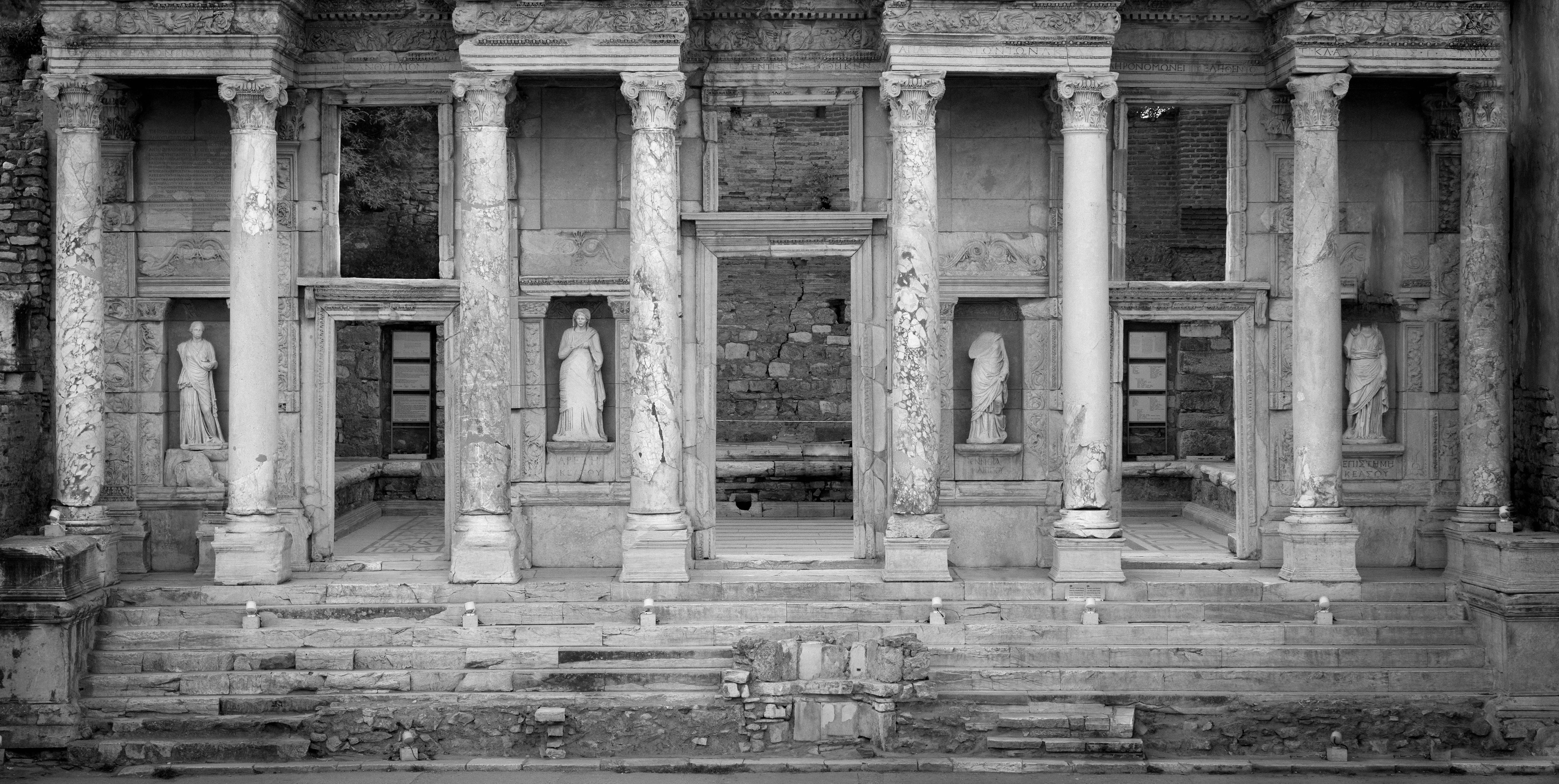
How sites get chosen
Countries that have ratified the World Heritage Convention (196 of them as of 2025, making it one of the most widely adopted international agreements in existence) nominate their own sites. Each country maintains what’s called a Tentative List of sites it considers eligible. When a government decides to formally nominate a site, it prepares a detailed dossier documenting the site’s significance.
That dossier is then evaluated by independent advisory bodies. For cultural sites, the evaluation is conducted by ICOMOS, the International Council on Monuments and Sites. For natural sites, it’s IUCN, the International Union for Conservation of Nature. These bodies send experts to visit the nominated site, review the documentation, and make a recommendation to the World Heritage Committee, a rotating body of 21 member states elected by the broader group of countries that have ratified the Convention. The Committee meets once a year, reviews the recommendations, and makes the final decision on whether to inscribe a site.
To qualify, a site has to demonstrate what UNESCO calls “outstanding universal value” and meet at least one of ten selection criteria. Six of those criteria are cultural, covering things like masterpieces of human creative genius and outstanding examples of architectural innovation. Four are natural, describing matters such as exceptional natural beauty and significant ecological processes. A site can also qualify as “mixed,” meeting both cultural and natural criteria. As of 2025, the list includes 1,248 sites across 170 countries.
The blind spots
For its first three decades, the World Heritage Convention focused almost entirely on physical structures: temples, ruins, historic city centers. This worked well for heritage that could be photographed and visited by tourists, but it didn’t account for cultural knowledge that lives in practice rather than in place.
Communities across the Global South raised this gap throughout the 1980s and 1990s, pointing out that oral storytelling traditions and living cultural practices like textile techniques or healing methods had no mechanism for international recognition under the existing system. In 1994, UNESCO’s own World Heritage Committee launched a Global Strategy acknowledging that the list suffered from geographic and thematic imbalances, and that its emphasis on architectural monuments projected “a narrow view of cultural heritage.”
This kind of gap tends to happen whenever a system outlives its original scope. The World Heritage Convention was initially built to protect monuments. But over time, it became the world’s primary mechanism for cultural preservation, which meant that anything that didn’t look like a monument had no place in that system. The absence wasn’t intentional but structural, a consequence of the system’s original design rather than a deliberate exclusion.
Almost a decade after the Global Strategy, UNESCO adopted a second treaty in 2003: the Convention for the Safeguarding of Intangible Cultural Heritage. This created a parallel track for living cultural practices, covering everything from Japanese Noh theatre to Ugandan bark cloth making. The 1972 Convention preserves what can be visited; the 2003 Convention preserves what can only be taught.
The 2003 Convention also introduced the Urgent Safeguarding List, reserved specifically for traditions that a country identifies as at risk of disappearing within a generation. Current entries include Turkish whistled language, a communication method developed to carry across mountainous terrain that has declined as mobile phones replaced it, and Colombian-Venezuelan llano work songs (sung a capella during cattle herding) that are disappearing as the ranching communities that sustained them migrate into cities. When safeguarding measures succeed, elements can be transferred off the Urgent list and onto the broader Representative List, as happened in 2025 with Emirati weaving traditions and Chinese Hezhen storytelling.
Together with one additional program, the Memory of the World Register (established 1992) for documentary heritage like manuscripts and archival collections, these three UNESCO lists represent the closest thing we have to a global catalog of human cultural inheritance. And the way traditions and sites end up on any of these lists reveals one of the most consequential features of the entire system.
Who decides what gets preserved
A tradition can only receive international recognition through UNESCO if a national government chooses to champion it. Countries submit their own candidates, write the narratives that accompany them, and decide which traditions to put forward for evaluation. The advisory bodies assess nominations against published criteria, but the pipeline is government-driven from the start.
This means governments are making two kinds of decisions simultaneously. They’re deciding which parts of their cultural identity to surface for global recognition, and they’re deciding, by omission, which parts to leave local and unclassified. A successful UNESCO listing brings real, material consequences: preservation funding through mechanisms like the World Heritage Fund and voluntary country contributions, increased visibility that often translates to tourism revenue and research attention, and a degree of legal protection (since countries that ratify the conventions agree to take measures to safeguard the sites and practices they’ve put forward). An unsuccessful nomination, or a tradition that’s never nominated at all, receives none of this. The incentive structure shapes what the system preserves.
For example, in 2013 UNESCO inscribed “washoku, traditional dietary cultures of the Japanese, notably for the celebration of New Year” on the Intangible Cultural Heritage list. The Japanese government’s nomination framed washoku as an integrated social practice tied to seasonal ingredients, communal gathering, and an expressed spirit of respect for nature. The inscription brought global media attention, culinary tourism, and government-funded educational programs aimed at preserving the practice domestically. Japan had both the institutional infrastructure to prepare the nomination and the resources to support it through the multi-year evaluation process.
Meanwhile, food traditions of comparable depth and complexity in regions without that institutional infrastructure (like the fermentation practices of rural West Africa or the communal cooking traditions of Indigenous Amazonian communities) remain uncatalogued by the international system. They aren’t less significant, but they are less visible because the nomination process requires government funding, institutional expertise, and years of preparation that many countries can’t allocate. The geographic breakdown of the World Heritage List reflects this same dynamic.
What the numbers show
The World Heritage List’s geographic distribution makes this pattern legible at a global scale. As of 2025, the Europe and North America region (as UNESCO defines it, which includes Russia and the Caucasus states) accounts for close to 47% of all inscribed sites. Africa, with a comparable total land mass, accounts for under 9%.
UNESCO’s 1994 Global Strategy was explicitly designed to address this disparity, but peer-reviewed research analyzing the decades since its adoption has found that the imbalance has persisted and, by some measures, has grown. Part of the reason comes down to resources. The nomination process requires institutional capacity and dedicated funding, and a government that can afford to prepare a detailed, multi-year nomination dossier is more likely to get sites listed than one that can’t, regardless of what cultural material exists within its borders. UNESCO has acknowledged this disparity and has directed funding toward supporting under-represented regions in preparing nominations, but the list's composition still reflects decades of uneven access to the nomination pipeline.
The World Heritage List doesn’t claim to be a complete inventory of everything that should be preserved. But because it’s the most prominent global framework for cultural recognition, its composition shapes the broader picture of where significant heritage is recognized. When close to half of all inscribed sites are concentrated in one region, that concentration influences international tourism flows, academic research priorities, and public perception of which parts of the world hold cultural weight. The list becomes a reference point, and the gaps in the list become gaps in the global picture.
How categories shape what we see
How something gets labeled determines what happens to it next. When a sacred Indigenous site is classified as a “cultural landscape,” it’s evaluated under criteria that emphasize human interaction with the environment, and the protections that follow are designed to maintain that relationship. Should the same site be classified under natural criteria, the protections would then focus on ecological preservation, and the community’s cultural connection to the land may not factor into the management plan at all. The site is the same, but the category it’s assigned to determines which evaluation track it enters, which funding streams it can access, and which legal protections apply.
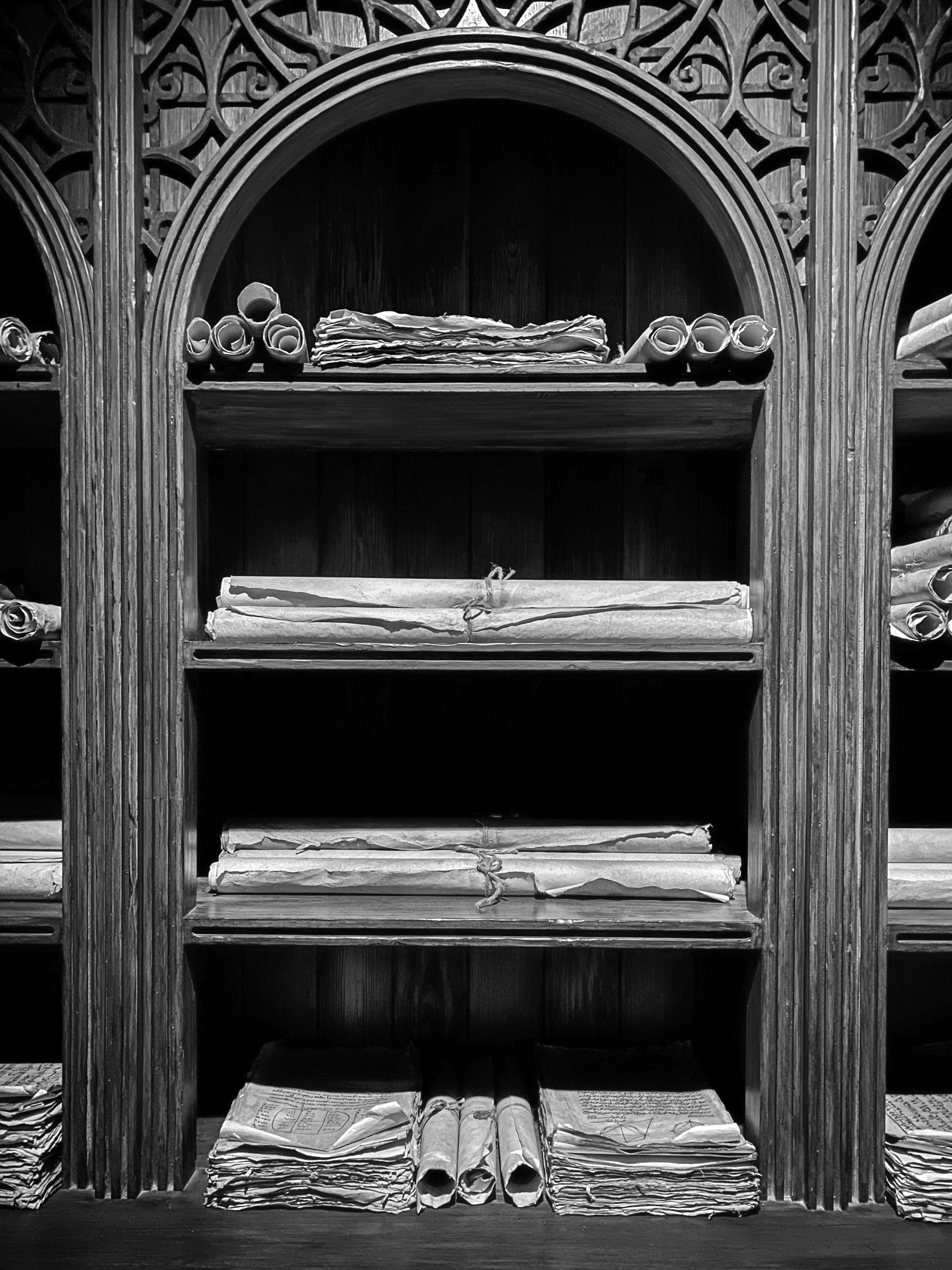
This dynamic extends well beyond UNESCO. A library’s classification system determines which subjects get shelved together and which get separated across different sections of the building, shaping how we browse and what we encounter along the way. A search engine’s indexing determines which results surface first, based on ranking criteria that reflect the priorities of the people who designed the algorithm. In each case, the organization feels neutral once it’s in place. The call number on the spine of a book doesn’t look like an argument, and a search result ranking doesn’t announce itself as a set of editorial choices. But every one of these systems was designed by people making decisions about what to prioritize and how to measure it.
Once a classification system is in place, it shapes what’s visible and what isn’t. The way information is organized is never a neutral reflection of what exists in the world. It’s a reflection of the choices made by the people who built the framework, and those choices determine what we find easily, what we have to dig for, and what we might never encounter at all.
A global catalog, open for browsing
UNESCO’s three heritage programs - the World Heritage List, the Intangible Cultural Heritage lists and the Memory of the World Register - represent the most ambitious attempt any institution has made to catalog humanity's cultural and natural inheritance in one place. No other system operates at this scale, across this many countries, covering sites, living practices, and documents simultaneously.
Before the World Heritage Convention, international cooperation on cultural preservation was limited and situational. The 1954 Hague Convention established protections for cultural property during armed conflict, and UNESCO had coordinated individual rescue campaigns like Abu Simbel, but there was no permanent, peacetime system for identifying and protecting heritage across borders. What a country chose to preserve in ordinary times was largely its own affair. But the World Heritage Convention changed that by establishing that certain places, practices, and records belong not just to the countries that house them, but to all of humanity. That shared premise is what makes international preservation funding, conservation expertise, and global responsibility possible: the recognition that losing a piece of cultural heritage anywhere diminishes the collective inheritance everywhere.
This is an extraordinary article. I love it. It's very important to understanding how culture is preserved world-wide and how that influences what is preserved. Thank you.
By far, one of the larger laments I have about geopolitics was planning to teach AI and Ethics through 2023 and 2024, then teaching it starting Sept 2024...and then what seemed like binding shared global values (UNESCO Memory work) swiftly seemed an era of the past.
Still working through what it means that a UN Declaration of Human Rights seems like emptier rhetoric in 2026, geopolitically.